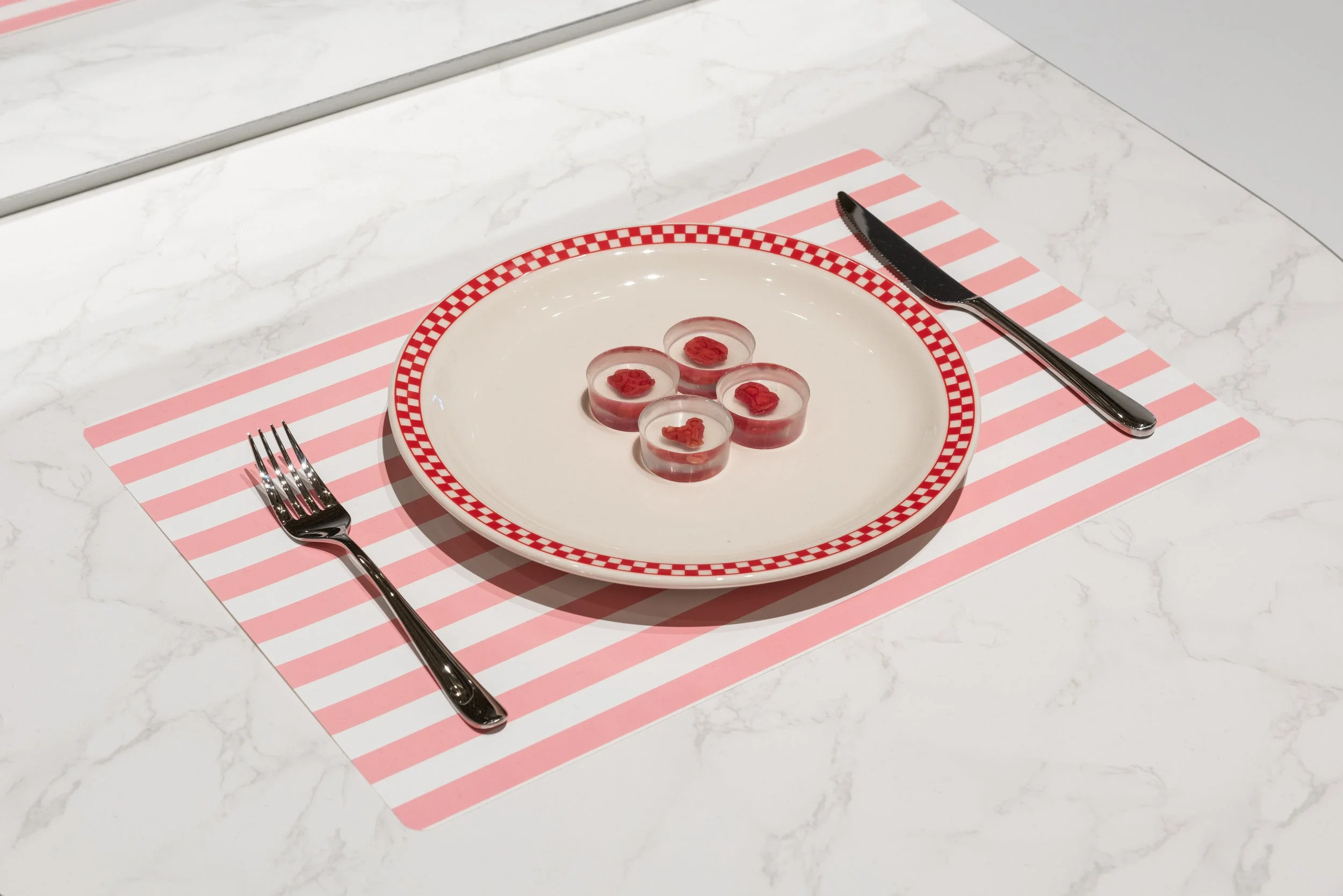
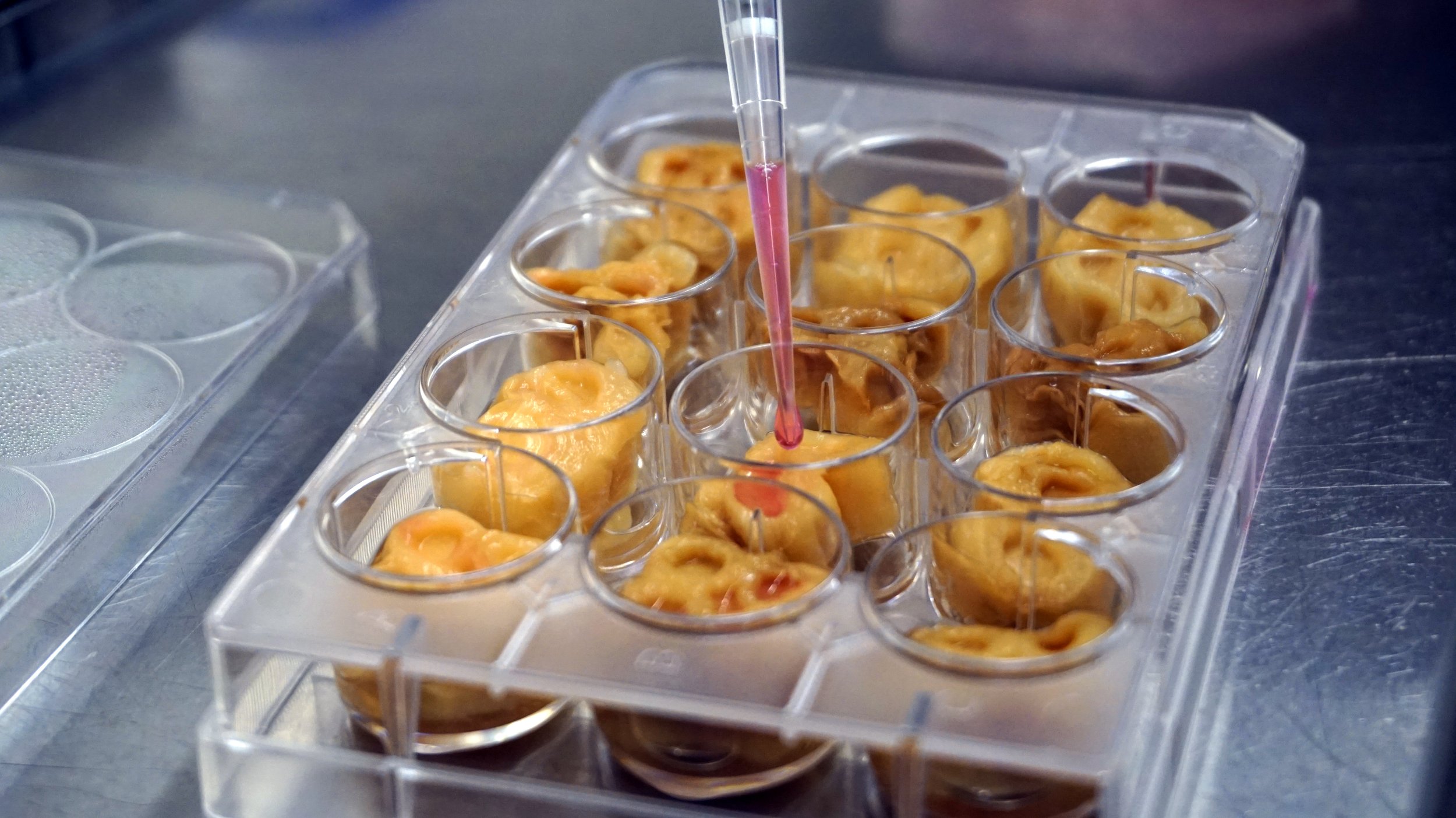
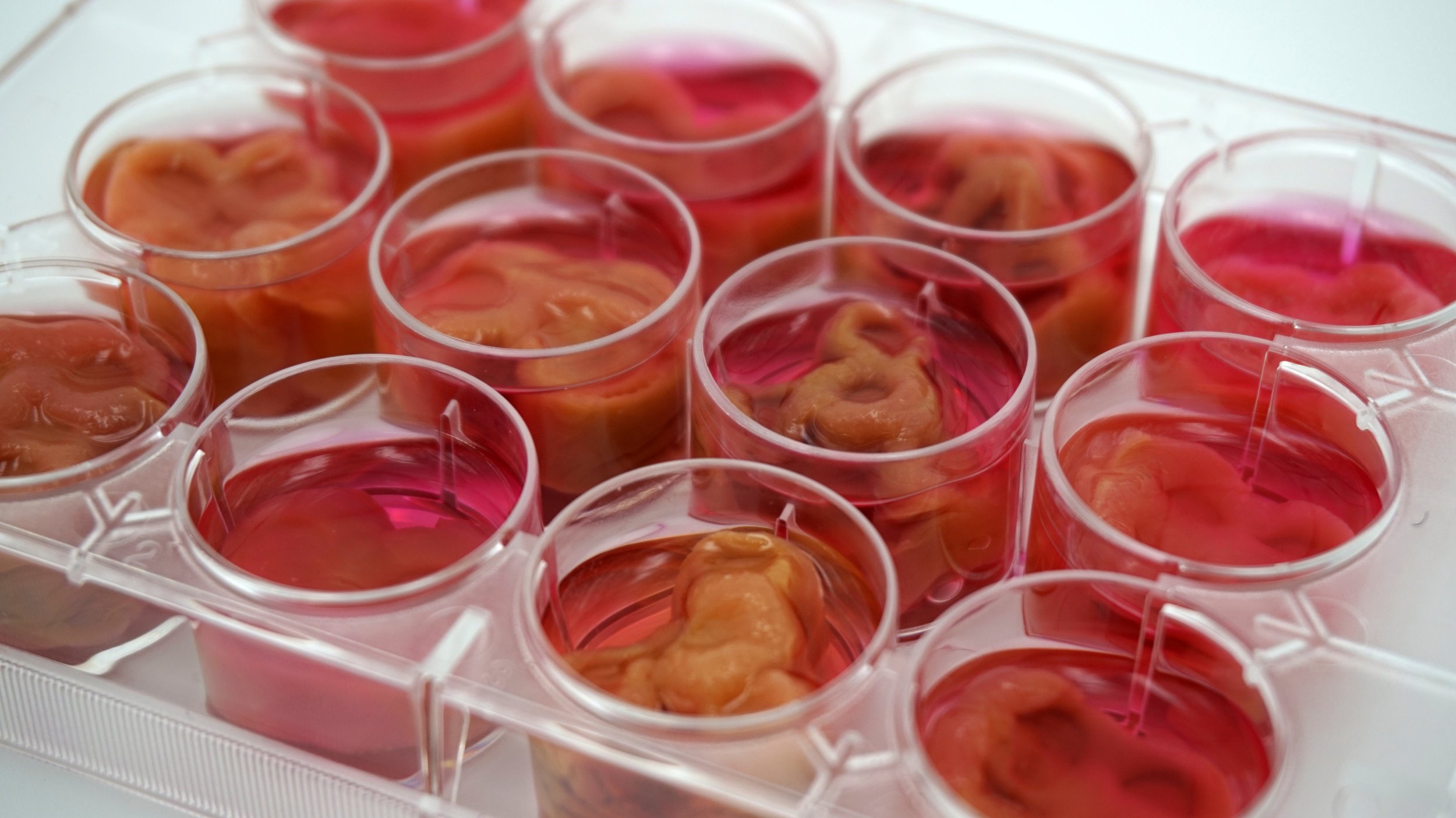
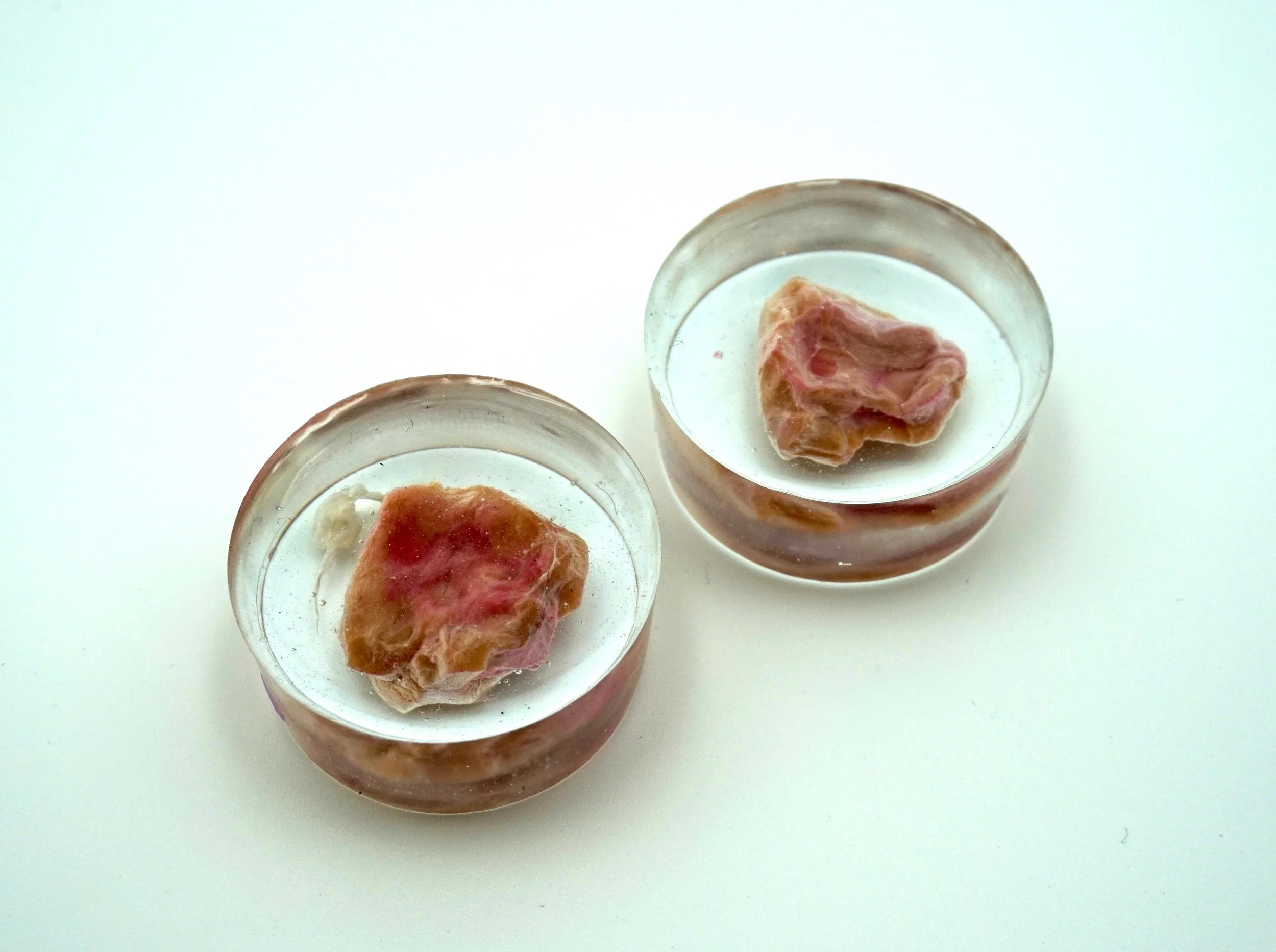
Ouroboros Steak is a critical design project that examines the ethical, cultural, and political assumptions embedded within emerging biotechnologies and the future of food. Developed in collaboration with Dr. Andrew Pelling and Grace Knight, the project takes the form of a fictional meal kit that enables individuals to cultivate and consume small steaks grown from their own cells.
Named after the ouroboros—the ancient symbol of a serpent consuming its own tail—the work collapses the distinction between producer and consumer, body and commodity, self and sustenance. By proposing a form of technologically mediated autocannibalism, the project intentionally destabilizes conventional ideas about what constitutes ethical consumption. If cultured meat is celebrated for eliminating animal slaughter, what happens when the source of that meat is ourselves?
Rather than offering a technological solution, Ouroboros Steak functions as a critical lens through which audiences can examine the promises and contradictions of cellular agriculture. The project challenges assumptions about sustainability, consent, labor, and the commodification of biological life while exposing the cultural frameworks that determine what societies consider natural, desirable, or acceptable. Through provocation and discomfort, the work invites reflection on how emerging biotechnologies reshape our relationship to food, identity, and the living world.
Presented as part of Designs for Different Futures, the project contributes to broader conversations about the social and ethical consequences of designing with living systems and asks whether technological progress alone can resolve the ecological and moral dilemmas it often helps create.
Ouroboros Steak was nominated for the Product category of the 2020 Beazley Designs of the Year at the Design Museum, where it was exhibited alongside other internationally recognized design projects addressing urgent social, environmental, and technological questions.